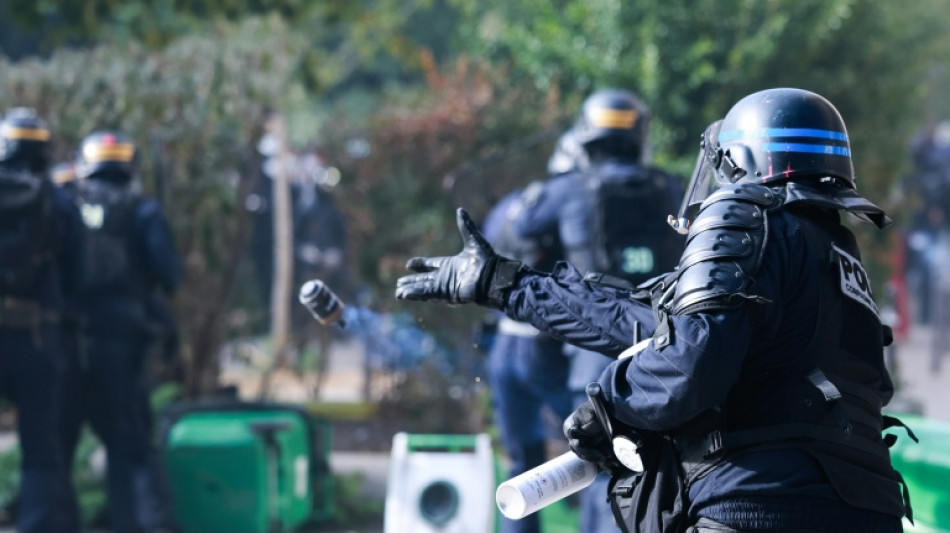
French PM denies police ordered to confront student protesters / Photo: Kenzo TRIBOUILLARD - AFP
French security forces do not have orders to "confront" protesting high school students, the prime minister said Wednesday, as allegations of police brutality mounted following days of protests that have shaken the country.
Hundreds of students, police and teaching staff have been injured since the movement demanding better conditions in high schools began, and more than 6,500 people -- mostly minors -- have been arrested.
After rights groups, unions and the students accused authorities of using disproportionate force, the government said it would suspend the use of stun grenades by police at student-led demonstrations.
Prime Minister Sebastien Lecornu said in a televised address Wednesday evening that the country could not be "indifferent" to the concerns of high school students, acknowledging that the "anger of young people does not come from nowhere".
He denied that security forces have "orders to confront" the young people, and promised the government would present a plan to respond to the crisis at the end of October.
But organisers urged fresh demonstrations on Thursday as several education unions called for new nationwide strikes.
"We know that if we stop making our voices heard, the movement will lose momentum," said Marilou, a high school student in Fontainebleau, near Paris, who didn't want to give her full name.
"We want real action, and until we get it, we'll keep mobilising," she told AFP.
Student protestors -- who have complained of missing teachers, overloaded timetables, dilapidated classrooms and buildings that cannot cope with rising temperatures -- have requested a meeting with Lecornu, saying they have costed proposals to present.
"I want to urge students -- both high school and university -- to stay mobilised starting tomorrow. Because the balance of power is on our side," said student union leader Ryad Rani.
- Stun grenades banned -
A 15-year-old lost a hand on Monday after police fired a stun grenade, and Interior Minister Laurent Nunez told radio broadcaster RTL early Wednesday that he had suspended the police use of stun grenades in response.
"I am suspending their use in the high school student protests until the facts of the incident have been clarified," said Nunez.
He stressed that this suspension was "only for the high school student protests" and for "just long enough to understand what happened".
Last week, a 14-year-old student in northwest Paris was hit in the face with a tear gas grenade at such close range that he lost several teeth.
A policeman was charged Tuesday over that incident.
Police have opened 18 internal investigations into allegations of misconduct since the protests began, Nunez said.
- Multiple crises -
In Wednesday's address, Lecornu also promised to release diesel stocks in a bid to bring down fuel prices, and reiterated an aim to cut the country's soaring debt to five percent of GDP next year.
The French government is wrestling with multiple crises including the protests and its 2027 budget, as well as a looming election next year to choose Macron's successor, with far-right candidate Marine Le Pen riding high in the polls.
The government has blamed the LFI for stoking tensions around the protests.
While most schools reopened Wednesday, more than 500 remained at least partially closed with students blocking doors with mounds of trash bins.
Several lawyers representing teens taken into police custody say they have faced physical violence and insults.
Ainoha Pascual, a lawyer representing three minors in Paris, said they had been "terrorised".
"A very large majority arrive in custody injured", having taken baton blows or being dragged on the ground, she added.
Prisca Ancion with the Collective for Judicial Action told AFP that every single high schooler arrested reported experiencing "an insult, a slap, having their head held down on the ground, chokeholds."
L.Dumont--LCdB