Virus-hit cruise ship evacuees head to Europe / Photo: - - AFP
A medical plane that left Cape Verde following the evacuation of a cruise ship hit by the hantavirus landed in Spain's Canary Islands on Wednesday, while a second flight headed for the Netherlands.
Downplaying fears over the deadly outbreak aboard the MV Hondius, World Health Organization chief Tedros Adhanom Ghebreyesus insisted it was not comparable to the Covid pandemic.
As the WHO said emergency crews had evacuated three people from the ship, experts confirmed the version of the virus detected aboard the Hondius is a rare strain that can be transmitted between humans.
Two sick crew members and another person who had been in contact with one of the confirmed cases were taken from the ship, which was moored off Cape Verde, the WHO said.
They later boarded flights at the airport in Cape Verde's capital Praia.
Plane tracker FlightRadar24 indicated one had taken off bound for Amsterdam, where it was due to land at 1730 GMT.
The other flight, a medical transport plane, landed at Las Palmas in Spain's Canary Islands on Wednesday afternoon, an AFP journalist there saw.
It has not been specified who was on the planes.
- Low risk: WHO -
Health officials played down fears of a wider global outbreak from the virus, which is less contagious than Covid.
UN health agency chief Tedros told AFP it was not like the Covid-19 pandemic, adding: "The risk to the rest of the world is low."
The ship has been at the centre of an international health scare since Saturday, when the WHO was informed that three passengers had died and the suspected cause was hantavirus.
The rare respiratory disease is usually spread from infected rodents, typically through urine, droppings and saliva.
Passengers began falling ill a month ago.
A Dutch man died on board on April 11, and his wife, who left the ship to accompany his body to South Africa, died there 15 days later after also falling ill.
Two other people are still being treated -- one in Johannesburg and one in the Swiss city of Zurich.
Spanish Health Minister Monica Garcia Gomez said the vessel would dock within the next three days in Tenerife, in the Canaries, and all foreign passengers would be flown back to their home countries from there if their health allowed.
The Hondius set sail from Ushuaia in Argentina on April 1, and has been anchored off Cape Verde since Sunday while emergency teams try to deal with the situation.
- 'Very rare' disease -
Health experts warned of the risk of a wider outbreak after it emerged the Dutch woman who died had flown on a commercial plane from the island of Saint Helena to Johannesburg while she was showing symptoms.
Officials are now trying to trace people on that flight, which South African-based carrier Airlink said was carrying 82 passengers and six crew.
Fuelling fears of further contact, Dutch airline KLM said on Wednesday that one of the people who died from the virus had been "briefly" on its flight from Johannesburg to the Netherlands on April 25, but was removed before takeoff.
Officials around the world, meanwhile, echoed Tedros's comments that the danger was low.
"Such transmission is very rare and only happens due to very close contact between people," South Africa's Health Minister Aaron Motsoaledi told a parliamentary committee.
He confirmed that tests had found the Andes virus, the only form of hantavirus that can be passed between humans.
Similarly, the Swiss health ministry confirmed that a passenger from the ship was being treated in hospital in Zurich and had tested positive for the Andes strain.
"There is currently no risk to the Swiss public," the ministry said.
- Ambulance boat evac -
The WHO's representative in Cape Verde, Ann Lindstrand, told AFP the three people taken from the ship were "stable", adding: "One of the three is asymptomatic."
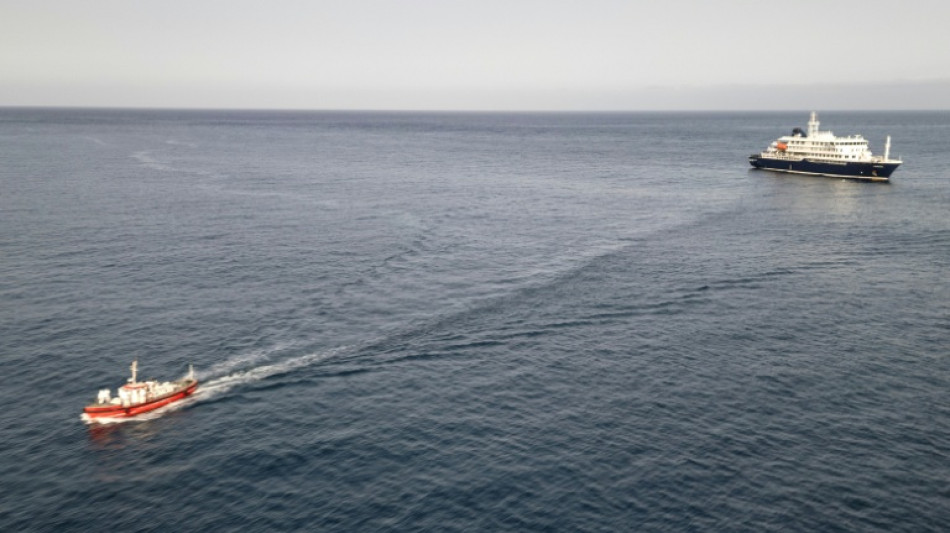
AFP footage showed a small red ambulance boat crewed by staff in hazmat suits and masks arriving next to the ship and three people stepping on board from a side door, while a group of other passengers gathered on the front deck.
Two flights later took off from the airport in Praia.
The Zurich patient brings the number of confirmed hantavirus cases to three, with the WHO already confirming one of the fatalities and a British passenger currently in intensive care in Johannesburg had tested positive.
There are a total of five further suspected cases, including the other two deaths, the WHO said earlier.
The WHO was trying to work out how hantavirus appeared on the ship, the first person who died having developed symptoms on April 6.
burs-jxb/jhb/giv/rlp
D.Pauwels--LCdB