KZN Health Readiness Under Scrutiny as El Niño Forecast Intensifies
With El Niño conditions forecast to bring hotter and drier summer weather to South Africa, questions are mounting regarding the readiness of KwaZulu-Natal’s health sector. A Spotlight investigation reveals significant gaps in emergency coordination, clinic resilience, and HIV treatment continuity as vulnerable communities face increasing climate risks.
The confirmation of El Niño conditions has triggered urgent inquiries into the capacity of KwaZulu-Natal’s health sector to withstand impending extreme weather. As meteorological forecasts predict a hotter, drier summer for South Africa, investigations indicate that while some preparatory measures exist, significant vulnerabilities remain in infrastructure resilience, emergency coordination, and the continuity of critical medical services for vulnerable populations.
El Niño, a natural climate pattern characterized by unusually warm sea surface temperatures in the central and eastern tropical Pacific Ocean, disrupts atmospheric circulation and influences global weather systems. In southern Africa, it is historically associated with increased drought risk and altered rainfall patterns. Dr. Nosipho Zwane of the South African Weather Service stated during a health department webinar in October that seasonal outlooks indicate an increased likelihood of below-normal rainfall across much of the country between December 2026 and February 2027.
"El Niño is often associated with hotter and drier summer conditions. However, this does not happen exactly the same way every time," Zwane noted, emphasizing the variability of the phenomenon.
Willem Landman, a professor of meteorology at the University of Pretoria, cautioned that while seasonal forecasts cannot predict individual storms or flash floods months in advance, even a drier-than-average season can bring intense downpours and localized flooding. He further explained that while there is no evidence that climate change increases the frequency of El Niño events, a warmer atmosphere and ocean can amplify associated extremes, including heatwaves and heavy rainfall.
The potential health impacts are multifaceted. Celeste Madondo, a public health specialist with the Foundation for Professional Development, warned that hotter conditions increase risks of heat exhaustion, heatstroke, and the worsening of chronic illnesses, particularly among pregnant and postpartum women, young children, older people, and outdoor workers. Research in rural KwaZulu-Natal has linked heat exposure to adverse pregnancy outcomes, with one study finding a clear relationship between maternal heat exposure during the month preceding conception and miscarriage.
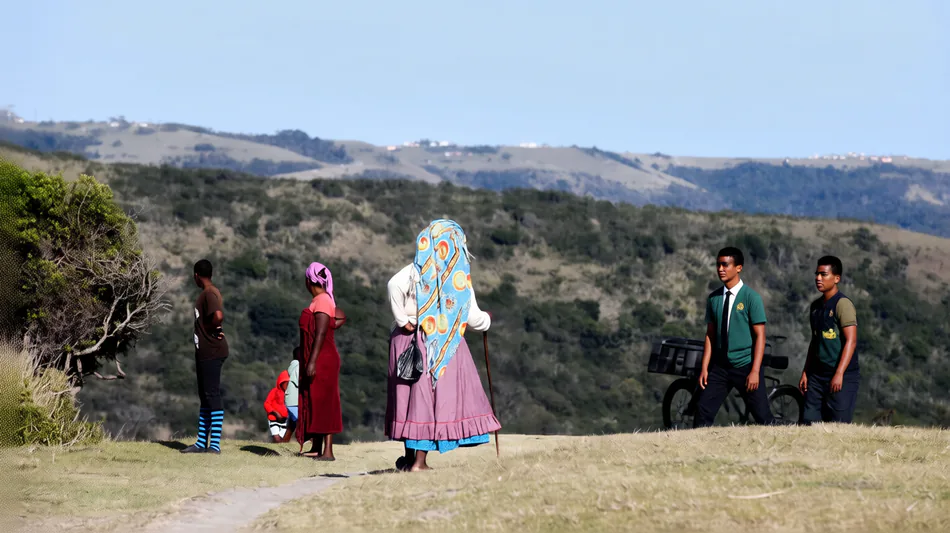
For residents in rural KwaZulu-Natal, these climatic shifts are not merely theoretical projections but immediate threats to livelihoods and safety. Phumelele Shabalala, 46, has lived in Vimbukhalo, a rural village near Bergville in the Drakensberg foothills, for 24 years. She grows vegetables to sell and feed her four children. During a dry spell in 2024, Shabalala reported that streams began drying up and her maize crops started dying. Another resident in the area told Spotlight they had lost cattle to dehydration and untreated wounds caused by sun exposure, threatening farming-dependent livelihoods.
Conversely, extreme rainfall poses its own dangers. In nearby Stulwane village, 28-year-old Nondumiso Nokwanda Sigubudu reported that heavy rainfall damaged her home in October 2025 and again in October of the current year. Part of a wall remains open, exposing her family to the cold and leaving their home unsecured. Sigubudu believes these conditions have affected her two children’s health, noting they frequently suffer from colds and fevers.
Extreme weather also disrupts access to medical care. A mobile clinic visits Vimbukhalo once a month for check-ups and chronic medication refills. However, Shabalala stated that the clinic sometimes cannot reach the village when heavy rain makes roads impassable, leaving residents to wait for another visit or seek alternative care.
These local disruptions occur against a backdrop of provincial vulnerability. KwaZulu-Natal has a long history of weather-related disasters. According to a Council for Scientific and Industrial Research report, the province recorded 85 declared weather- and climate-related disasters between 2007 and 2021, more than any other province in South Africa.
The intersection of climate stress and public health is particularly acute regarding HIV treatment. In KwaZulu-Natal, almost 1.6 million people were receiving antiretroviral treatment in 2025, according to Thembisa, the leading mathematical model of HIV in South Africa. Drought can complicate adherence to these regimens.
Research by the Africa Health Research Institute (AHRI) examined the impact of drought on HIV treatment in rural KwaZulu-Natal, analyzing records from more than 40,000 people at 17 clinics between 2010 and 2018. The study found that drought was associated with fewer patients taking their medication as prescribed or staying in HIV care, although some recovery occurred after the drought ended.
A related study, based on interviews with 27 people living with HIV in rural Hlabisa in the uMkhanyakude district, explored how the 2015–2016 El Niño-related drought affected access to treatment. Collins Iwuji, a professor of climate, environment and health at AHRI and co-author of both studies, explained that food insecurity was a primary challenge.
"During the drought, the price of food was also going up and they didn’t want to take their pills on an empty stomach, because of the potential side effects," Iwuji said. "So what some of them did was they skipped the pill."
Other patients missed clinic appointments while collecting water or lost contact with their usual clinics after moving with their livestock in search of water. Iwuji cautioned that while their work could not prove that drought caused these treatment interruptions, participants’ accounts suggested that drought-related hardship played a role.
When asked whether the province’s HIV services are better prepared for climate-related disruptions, Iwuji described improvements as "partial rather than systematic." He noted that measures such as allowing people living with HIV to collect three to six months of medicines at a time and establishing community medicine collection points can reduce the need for frequent clinic visits. However, he observed that these services expanded significantly during the COVID-19 pandemic rather than in response to climate-related emergencies.
The question of preparedness extends beyond HIV services. The devastating floods of April and May 2022 exposed serious problems within the province’s preparedness for extreme weather. The Presidential Climate Commission described the government’s response as largely reactive, identifying poor coordination between departments, inadequate preparation, and gaps in getting early warnings to vulnerable communities.
Problems were also evident within the health system. A 2026 study involving staff at a KwaZulu-Natal provincial tertiary hospital found that the facility lacked specific plans for weather-related emergencies when researchers collected data in 2023. Staff reported shortages of personnel and resources, difficulties obtaining emergency supplies, and poor communication.
In November 2023, the National Department of Health, working with the World Health Organization (WHO), began establishing a network of Public Health Emergency Operations Centres (PHEOCs) to strengthen preparedness and coordination. Despite these efforts, a draft health-sector readiness assessment presented by Mbhekiseni Khumalo, the national health department’s Director of Epidemiology and Surveillance, at an October webinar suggests significant gaps remain.
The country scored 61% across 11 areas of preparedness. Rapid response teams and communication with communities lagged at 45%, while coordination received just 28%. Health service delivery performed better at 82%. The assessment reflects preparedness nationally rather than in KwaZulu-Natal specifically, and the findings are preliminary, with supporting evidence attached for only 10% of the indicators assessed.
In KwaZulu-Natal, the provincial health department states it has put measures in place to prepare for extreme weather emergencies. Ntokozo Maphisa, a spokesperson for the provincial department, said the department receives weather warnings through the Provincial Disaster Management Centre, the South African Weather Service application, and the National PHEOC WhatsApp channel. This information is shared with all district health emergency teams, which then implement response measures.
Maphisa added that the department has developed backup plans for floods, heatwaves, fires, and other emergencies, with instructions for healthcare workers. The department also works with other sectors to maintain essential health services.
However, ensuring that weather warnings reach healthcare facilities and communities in time remains a challenge. A R46.5-million WEATHER project, involving the University of KwaZulu-Natal and international partners, aims to improve how flood notifications reach clinics and hospitals. Professor Saloshni Naidoo, one of the project’s principal investigators, noted that published research has shown official warnings did not reach some eThekwini community health centre managers in 2022.
"Closing that gap between warning and facility action is at the centre of the system we are designing," Naidoo said. The research found that the centres’ emergency plans lacked clear instructions for responding to weather-related disruptions. The proposed system would combine official weather warnings with practical advice for health workers, such as checking medicine supplies and contacting patients on chronic treatment.
The system is being designed to reach rural communities with poor internet connectivity. Maphisa confirmed that senior provincial health managers are involved in the project, which is expected to be tested in early 2027 and evaluated later that year. It will therefore not be operational during the coming summer.
The condition of clinic and hospital buildings is another critical component of preparedness. The provincial health department has been repairing facilities damaged by severe storms, including the 2022 floods. Its Strategic Plan 2025/26–2029/30 lists 47 repair projects involving roofs, gutters, and drainage systems. At the time of the plan, four were complete, 19 under construction, 18 at the tender stage, and six still being planned.
However, repairing damage does not necessarily make facilities more resilient to future extreme weather. The Presidential Climate Commission has warned that rebuilding damaged infrastructure without making it better able to withstand extreme weather could leave it vulnerable to future disasters.
Iwuji stated that making healthcare facilities more resilient starts with assessing the risks each building faces. He noted that the WHO has developed a framework for assessing facilities’ vulnerability to floods, storms, extreme heat, and drought, as well as their capacity to cope with these threats. Such assessments can help determine what improvements each facility needs.
Extreme heat presents additional challenges, particularly in ageing healthcare buildings. "The buildings are old. The aircons don’t work. It’s not maintained," Iwuji said. "Now if you have an overcrowded facility that’s hot, the healthcare workers are also experiencing the effects of the heat. But we expect them to ensure that they serve clients to the best of their ability under these conditions."
The KwaZulu-Natal health department did not answer Spotlight’s questions about whether the repairs include measures to make healthcare facilities more resilient to future extreme weather.
Iwuji acknowledged that the province has made progress in improving coordination between departments since the 2022 floods but questioned how far these changes have translated into action. "There is movement towards creating some resilience. But in terms of practical implementation and what that means, that is what I haven’t seen yet," he said.
L.Dumont--LCdB