Foreigners among 12 killed in ferocious Spain wildfire / Photo: JOSE JORDAN - AFP
A fast-moving wildfire in southern Spain has killed 12 people of different nationalities after trapping them in vehicles and as they tried to get away, authorities said on Friday.
The death toll from the wildfire -- one of the highest in Spain's recent history -- could rise further as authorities said 23 people remained unaccounted for.
The fire, which started on Thursday in an area of steep ravines, destroyed forests and swathes of scrubland in the southeastern Los Gallardos area of Andalusia, home to many foreign residents.
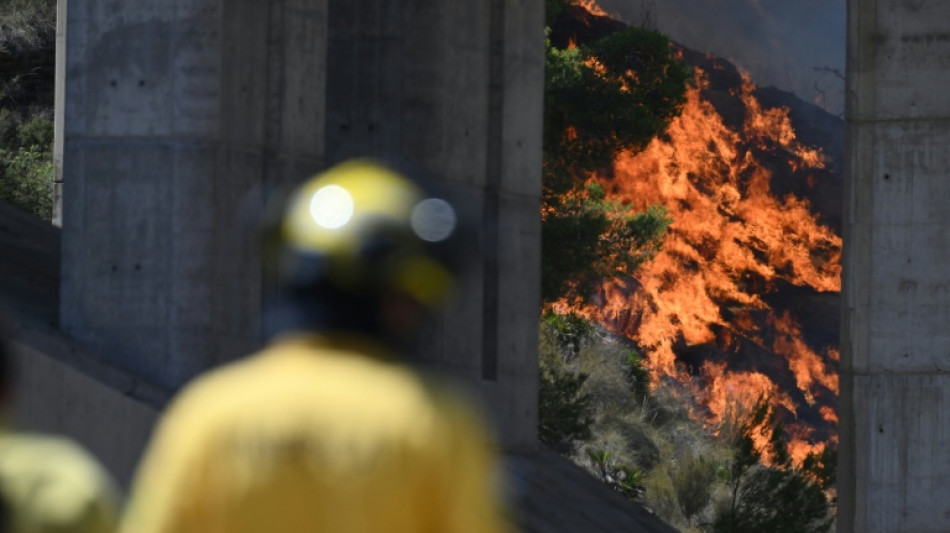
AFP reporters on Friday saw firefighters battling to douse the flames sweeping across the parched countryside, sending plumes of white smoke into the air.
Interior Minister Fernando Grande-Marlaska confirmed people of "different nationalities" were among those killed, without mentioning specific countries.
Marlaska, speaking to reporters in the ground-zero village of Bedar, advised caution over the figure of 23 people missing, as some could involve people being unable to contact loved ones who remain unharmed.
The head of the Andalusia regional government, Juan Manuel Moreno Bonilla, said DNA testing would be needed to identify the 12 victims as they were "badly burnt and unrecognisable".
- 'Extraordinary pace' -
Spain has sweltered in extreme heat exceeding 40C in recent weeks, creating tinderbox conditions favourable for the rapid spread of wildfires.
Scientists agree that human-driven climate change is making extreme weather events such as heatwaves more likely and more intense.
Fuelled by gusts of around 50 kilometres (30 miles) per hour, the blaze moved at "an extraordinary pace", advancing 15 kilometres in just two hours, Moreno said.
The authorities said residents of the whitewashed village of Bedar had been told to either take a recommended evacuation route, or stay in their homes given that the fire was so close.
The failure of some residents to follow these recommendations "may have led to the tragic loss of life in some cases", Moreno said.
Located about 15 kilometres from Spain's Mediterranean coast, Bedar is popular with those seeking a quieter alternative to the nearby beach resorts.
Ana, a shopkeeper in Los Gallardos, told local news outlet Ideal that "panic was setting in among the residents" as nearby settlements were evacuated.
"People are scared of going out and the streets are quieter than usual," she said.
Helping overnight in the municipal hall, where evacuees were resting in improvised beds, Ana said she saw "people with panic attacks that were so strong that I decided not to go back in".
- Difficult access -
Around 500 firefighters, backed by Spain's Military Emergency Unit, battled to contain the flames which officials said have so far ravaged some 3,200 hectares of land.
Moreno said it could take days to bring the blaze under control.
"The rugged terrain, with its steep slopes, has made access extremely difficult," he said.
The Andalusian branch of national weather agency AEMET said weather conditions were due to be "rather more favourable" on Saturday, with moderate wind and cooler air.
Four of the victims are believed to be British nationals who were found burnt to death inside a right-hand drive car, Moreno said.
Another seven people died while trying to escape on foot, Bedar mayor Angel Francisco Collado told reporters.
Spanish media said the 12th victim was a cyclist who got swept up in the flames.
Danielle Gillam-Kirton was among many people taking to social media to appeal for information about loved ones.
"My mother texted me yesterday at 6:53 pm to say they were being evacuated," she wrote. She has not heard from her parents, who live in Bedar, since that message.
Deadly wildfires devoured almost 400,000 hectares (one million acres) of land in Spain last year, the highest figure recorded for the country by the European Forest Fire Information System.
M.Franck--LCdB