Taiwan's leader says government to propose record defence spending for 2027 / Photo: I-Hwa Cheng - AFP
Taiwan's government will propose record defence spending for 2027, President Lai Ching-te said on Monday, as the island democracy faces growing military pressure from China.
Beijing claims Taiwan is part of its territory and has threatened to use force to annex the island of 23 million people.
Taipei's announcement comes as governments around the world boost defence spending in the face of intensifying conflicts, and growing concern about US commitment to the Asia-Pacific region.
"Next year's total defence budget -- including both the annual budget and the special budget -- will exceed NT$1 trillion for the first time, reaching NT$1.1225 trillion ($35.2 billion)," Lai said in a statement issued by the Presidential Office.
Defence spending will account for more than three percent of GDP, "demonstrating Taiwan's resolve to strengthen its self-defence capabilities", Lai said.
"Investing in national defence is an investment in peace," he said.
"We will continue to build a more robust defence force to maintain peace and stability in the Taiwan Strait and the region."
Overall government expenditure to be proposed for 2027 will reach NT$3.9 trillion, which Lai said was more than double its 2016 level.
The government's budget includes a cash handout of NT$10,000 for every resident, which Lai described as an economic "dividend" from AI-driven growth to be shared by the public.
- Drone spending -
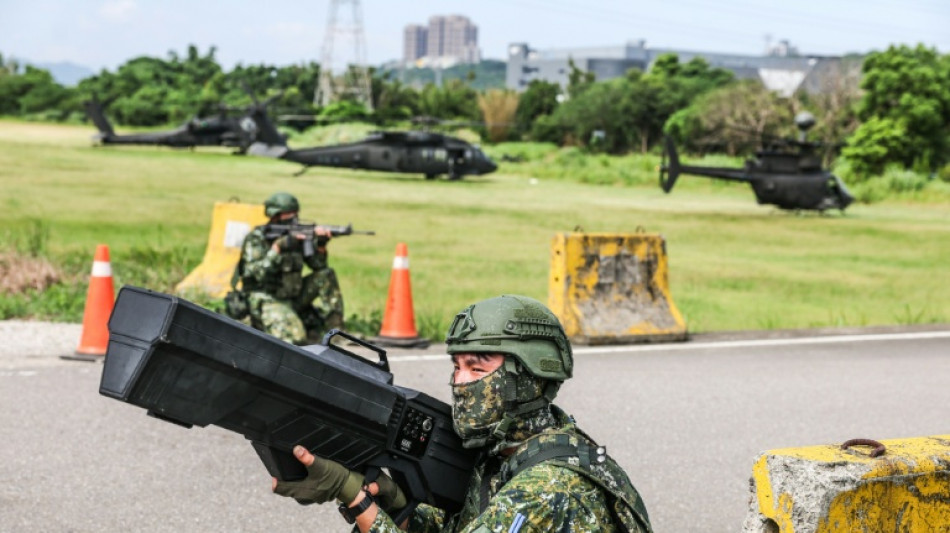
Taiwan has been boosting defence spending for years and acquiring smaller and more nimble weaponry, including drones, to enable its military to wage asymmetric warfare against China.
Under intense US pressure to cough up more on security, Lai's government has vowed to increase defence spending to five percent of GDP by 2030.
But Lai's government has been at loggerheads with Taiwan's opposition parties, which have a majority in parliament, over how much to spend on boosting the island's defence capabilities.
The main opposition party Kuomintang, which favours closer ties with China, and the Taiwan People's Party passed a $25 billion special defence budget in May, slashing by a third the amount sought by Lai's Democratic Progressive Party.
The opposition stripped out around $15 billion that the government had wanted to use for domestic drone procurement and other efforts to boost defences.
Lawmakers are now considering rival proposals for drone investment worth billions of dollars that could be passed as early as this week.
Opposition lawmakers agreed to cut this year's budget by NT$48 billion, or around 1.6 percent, nearly eight months after the government's spending plan was supposed to be approved.
That is the longest it has ever taken parliament to pass an annual general budget. Parliament is likely to receive the 2027 budget for review by the end of August.
R.Michiels--LCdB