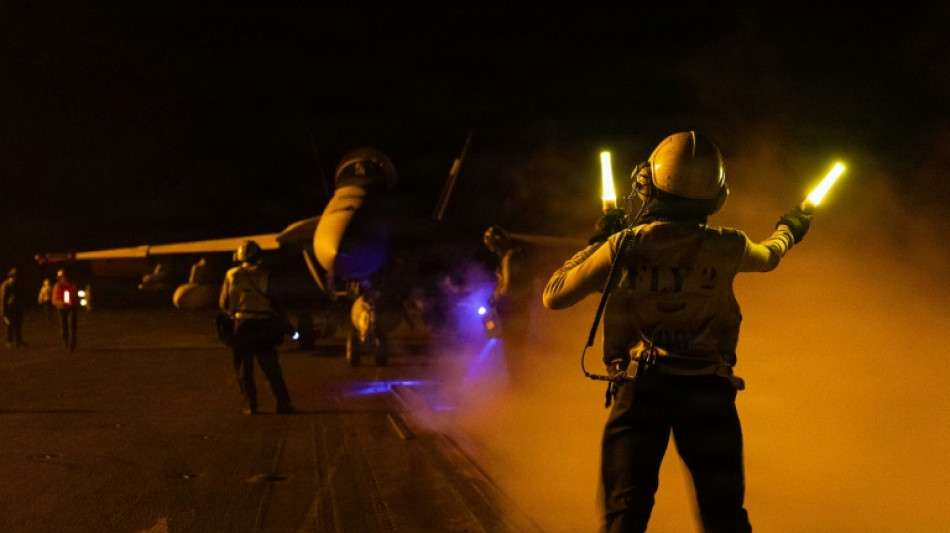
Iran strikes ships, expands no-go zone outside Hormuz strait / Photo: Handout - US NAVY/AFP
Iran said it attacked more than a dozen vessels trying to pass through the Strait of Hormuz on Wednesday, as it announced an expansion of a no-go zone outside the strategic waterway it has blockaded for months.
The fresh attacks and fighting with the United States have sent oil prices above $100 per barrel again as Tehran chokes off the strait and Washington presses a counter-blockade of Iranian ports.
Iran's Revolutionary Guards said on Wednesday they attacked two US vessels, eight oil tankers, and 10 "non-compliant vessels" that were trying to pass through the route crucial for oil and gas trade, Iranian state media reported.
The United Kingdom Maritime Trade Operations (UKMTO) said "several" vessels in the Gulf of Oman and the Gulf were "subject to disabling fire as part of ongoing military activity in the region".
The Gulf of Oman lies on the Indian Ocean side of the narrow Hormuz strait, a vital energy conduit that normally carries around a fifth of the world's oil and liquefied natural gas.
Iran's Guards also for the first time added parts of the Gulf of Oman and the Arabian Sea to a new "prohibited zone" on Wednesday, saying that exact coordinates will be announced later.
"If a vessel enters that area without coordination, it will be subject to our sanctions," Guards spokesman Hossein Mohebi told state television.
The Guards also said they struck a US military base in Jordan in response to US forces destroying five Iranian oil tankers a day earlier.
Jordan's army shot down 18 missiles fired at the kingdom, it said.
Iran's foreign ministry condemned the attack on its oil tankers as "an overt threat to regional and international peace and security," saying that they "increase the dangers of tensions in the region".
It said the targeting of US military facilities in the region was "self-defence".
The Islamic republic warned of further strikes targeting tankers off the coast of US allies Kuwait and Bahrain.
The US military for its part had said it was responding to an Iranian attack targeting an American warship, the second such incident in less than a week.
- Nuclear referral -
Iran's Guards, the ideological arm of the military, said the war could be brought to an end if Washington met its conditions, which included demands on the wars in Lebanon and Yemen.
"It must... refrain from renewed threats, withdraw the Israeli regime's army from Lebanon, end the blockade of Yemen, release $24 billion in Iran's frozen assets and refrain from any interference in the country's nuclear and missile capabilities," Mohebi said, according to Fars news agency.
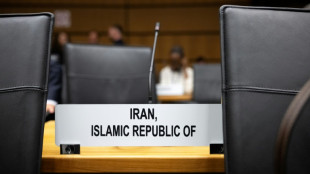
But as Washington tries to choke off Iran economically, the International Atomic Energy Agency (IAEA) board of governors on Wednesday voted to refer Iran to the UN Security Council over its nuclear "non-compliance", in a diplomatic move that piles pressure on the Islamic republic.
The resolution seen by AFP was adopted by 23 votes in favour, three votes against and eight abstentions, they said. Russia, China and Niger voted against it.
Israeli Prime Minister Benjamin Netanyahu also repeated his claim on Wednesday that Iran's Islamic republic was on the verge of collapse.
"There is still work to be done -- the main task is to bring down the terror regime in Iran. We are very close to that," he said on a visit to troops in southern Syria, where Israel has occupied what it calls a "security zone".
The latest round of US-Iran fighting was triggered after American forces destroyed five Iranian oil tankers on Tuesday, with the US military saying it "directed the crews to abandon ship" before hitting the vessels.
"Iran continues to try to hit US naval ships, and for every time they do that or try to do that, they're going to lose tankers, and I think you'll see that again today," US Secretary of State Marco Rubio told reporters on Tuesday on a visit to Colombia.
Iran has asserted control of the Strait of Hormuz since US-Israeli strikes began the war in February, with traffic through the waterway virtually paralysed.
Tehran requires vessels to obtain permission and pay transit fees before using the strait.
burs-ris/jfx/jsa
S.Denis--LCdB