Hong Kong pays final respects to former city leader Tung / Photo: Peter PARKS - AFP
Hong Kong officials and the public commemorated the city's first post-colonial leader, Tung Chee-hwa, at his funeral on Sunday, AFP journalists saw.
Tung, who died this month at the age of 89, was a former shipping tycoon hand-picked by Beijing to run Hong Kong after the former British colony's handover to Chinese rule in 1997.
The stauch conservative oversaw a rocky eight-year tenure until he resigned in 2005, following widespread protests.
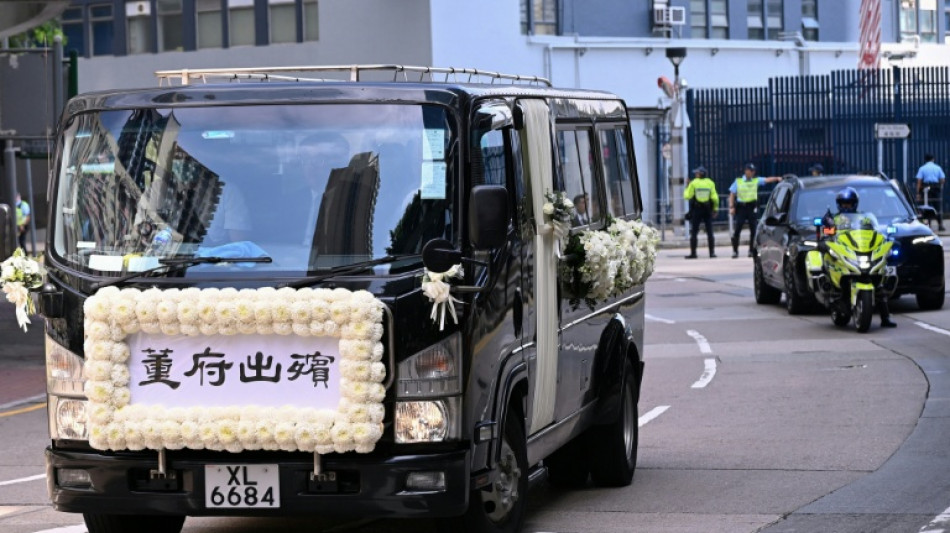
Tung's casket, draped with the Chinese national flag, was driven in a hearse from the Hong Kong Funeral Home to a crematorium on Sunday, AFP reporters saw.
A portrait of Tung -- smiling and sporting his signature crew cut -- was displayed in the memorial hall, surrounded by white orchids symbolising love and respect.
Hundreds of wreaths sent by government officials and business leaders lined the street outside the memorial hall.
A tribute note from his alma mater, Britain's University of Liverpool, read: "We remember him with great gratitude and respect."
A divisive figure, Tung's policies set the tone for the city's development following the handover, with some sparking widespread protests.
A funeral committee hailed him as a "renowned patriot" and "close friend of the Communist Party".
Cheung Kwok-lik, an 89-year-old retired renovation worker, said he had travelled an hour by bus to pay his condolences to the former leader.
During his tenure, Tung weathered the Asian financial crisis and the deadly SARS epidemic, which "was by no means easy", Cheung said.
Tung's leadership also coincided with record unemployment and the 1997 avian flu outbreak.
Resident Kiki Ho said that even after paying her respects, she still felt "sorrowful and emotional".
"Given that era and circumstances he encountered, the situation was not in his favour," the 68-year-old said.
"He was a gentleman, a man of experience who genuinely wanted to do something for Hong Kong... but the political arena may have been too complicated for him," she added.
The British and US consulates had previously praised Tung for the historic role he played.
For decades, he served as an essential bridge connecting Beijing, Hong Kong and Washington.
Max Baucus, a former US ambassador to China who called Tung a close friend, said: "In the later decades of his life, he was devoted to the belief that our two countries... needed to assure and maintain mutual peace."
"He believed the best way to achieve that was through people-to-people diplomacy," Baucus added.
Tung is survived by his wife Betty Chiu, their two sons and their daughter.
W.Blondeel--LCdB