Latvian pro-Europeans set for election win: partial results / Photo: Wojtek RADWANSKI - AFP
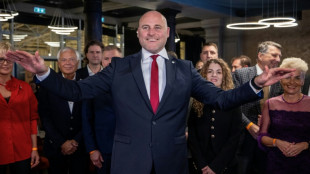
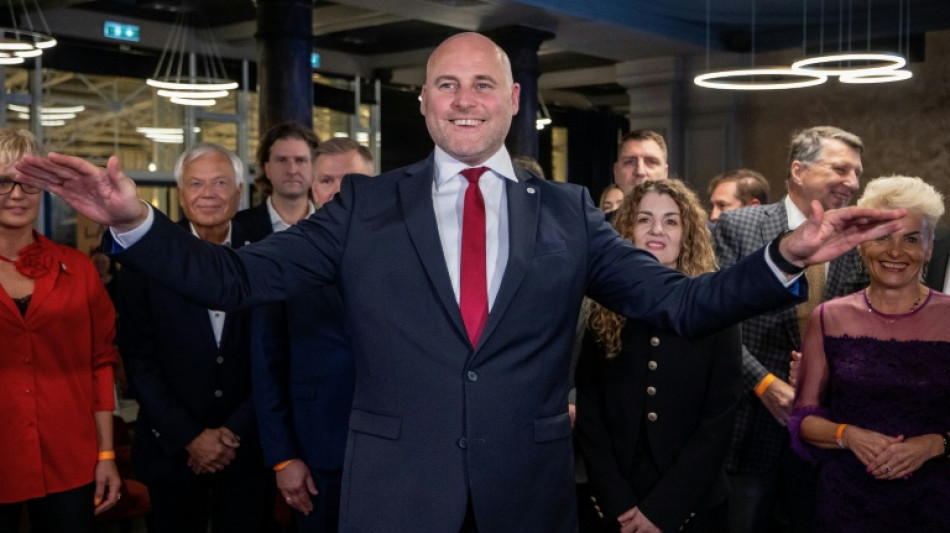
Prime Minister Andris Kulbergs' centre-right party was set to win Latvia's parliamentary election, partial results showed on Sunday, suggesting the country will maintain its pro-European and pro-Ukrainian course.
But populist parties, boosted by support from Latvia's Russian-speaking minority, also had a good night after an election campaign dominated by fears over neighbouring Russia and the cost of living.
Kulbergs' United List party was in the lead with 35.4 percent, according to state TV, with more than 90 percent of votes counted.
"It's higher than expected," Kulbergs told journalists earlier, reacting to exit polls that gave his party a similar lead.
"That means people truly want change," he added, which he said meant "economic growth" and "a future for (Latvia's) children".
Kulbergs only assumed the post of prime minister in May.
But his coalition, which pre-election polling had suggested would weaken, will not survive in its current form.
One of its members looked set to lose their seats and others were not performing as well as they had hoped.
- 'Strong border' -
Security remains central to political debate four years after Russia's invasion of Ukraine.
Latvia, a member of NATO and the European Union since 2004, views Russia as its principal security threat and has significantly increased defence spending in response.
"Because we are the external border of Europe, we must have a strong economy... a strong border region," Kulbergs said.
"That is the main task."
But rising living costs, low wages, strains on the healthcare system and long-term population decline all featured prominently in campaign debates.
While most parties expected to enter parliament back both high military spending and maintaining aid to Kyiv, the Sovereign Power party has broken ranks.
It has opposed military aid to Ukraine and further increases to defence spending and looked set for a third-place finish after focusing on cost of living issues.
However, it has been criticised as pro-Russian by its detractors and most major parties have ruled out working with it.
Both populist parties were seen as benefiting from changes in voting patterns among the Russian-speaking minority -- who make up a third of the population.
They had long rallied around the Harmony party, which is broadly seen as pro-Russia and was at one time the country's biggest party.
Harmony's support collapsed dramatically in the last election, held shortly after Russia's full-scale invasion of Ukraine, and it lost its parliamentary representation.
T.Luyten--LCdB