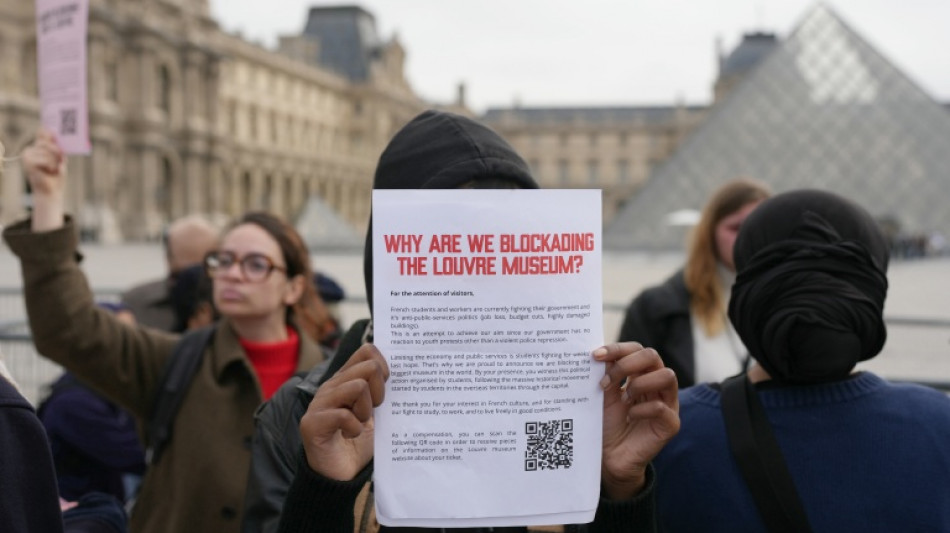
PM calls for curfews in France as govt grapples with unrest / Photo: Dimitar DILKOFF - AFP
The French prime minister called for localised curfews on Monday, as protesters blocked the entrance to the Louvre in Paris and authorities scrambled to stem public discontent that over the weekend saw mass cost-of-living demonstrations spill over into some of the worst street violence in recent years.
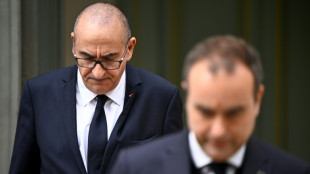
Prime Minister Sebastien Lecornu huddled with ministers in a crisis meeting after the interior minister said the police "had lost control" during the weekend's unrest.
With the Yellow Vests movement, which organised the weekend's rallies, calling for a new round of protests next Saturday, Lecornu called for regional authorities to impose "partial" and "localised" curfews to protect businesses after hundreds of shops were damaged and looted.
"I'm absolutely determined to restore public order", he vowed, adding that the government was ready to impose a state of emergency "if needed".
Other European countries, where anger over rising prices has also led to protests, were keeping a nervous eye on the developments, with smaller clashes breaking out in Milan and Belgium over the weekend and protests simmering in Spain and Portugal.
Some half a million people turned out across France on Saturday to denounce the surging cost of living, a culmination of four weeks of protests that began with high school students demanding better conditions at their schools.
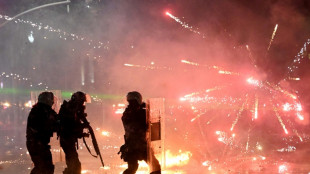
What started as peaceful demonstrations morphed into violence in some places, as masked groups on the sidelines of the protests attacked law enforcement, broke into town halls and other public buildings, setting many of them ablaze, looted shops, and set fire to cars, bicycles and scooters on the streets.
Interior Minister Laurent Nunez offered to resign on Monday after more than 2,500 people were arrested and nearly 1,000 members of the security forces injured. Protesters were also hurt, with one demonstrator's hand blown off by a police crowd-control grenade.
"On Saturday, in some major cities, you couldn't look shopkeepers in the eye after hundreds of shops had been looted and tell them we hadn't lost control," Nunez said.
French President Emmanuel Macron refused Nunez's resignation, even as he acknowledged security and intelligence failures in the government response, despite the deployment of some 60,000 law enforcement personnel across the country on Saturday.
Nationwide, more than 2,330 people were taken into police custody over the weekend, 70 percent of whom were adults -- and many of whom were already known to authorities, Justice Minister Gerald Darmanin said Monday.
More than 2,000 shops were expected to have been affected by the weekend's violence across France, with damage running into "hundreds of millions of euros", according to chamber of commerce president Alain Di Crescenzo.
In an address to the nation Sunday, Macron slammed the "unbridled" violence and said local authorities would be able to ban some rallies, but stopped short of imposing more drastic measures.
City authorities in Marseille said on Monday they had banned public gatherings from noon to 08:00 pm (1000-1800 GMT).
The European Union slammed the weekend violence as "unacceptable" but warned that the right to peaceful protest "must be protected" in France.
Germany condemned the violence and updated its travel advice for France, saying "further demonstrations and, in some cases, further outbreaks of violence in the coming days cannot be ruled out".
The United Kingdom said the right to protest "can never excuse violence".
- Louvre blocked -
The public discontent showed no signs of subsiding on Monday, with demonstrators blocking the entrance to Paris's iconic Louvre Museum, the most visited in the world.
Rising prices have fuelled anger in France, where diesel prices have jumped nearly 40 percent and petrol by 25 percent since March and where food prices have risen by 25 percent since 2021.
The unrest has flared just months before a key presidential election where centrist Macron cannot stand again and Marine Le Pen, the far-right presidential candidate for the National Rally party, is riding high in the polls.
Ministers and Le Pen have accused ultra-left groups of stoking the violence to boost the chances of the far-left firebrand Jean-Luc Melenchon in the presidential polls.
On Monday Lecornu blamed the "ultra-left movement" for seeking to "orchestrate deep unrest across the country."
"There is a whole network that could be mobilised to even call into question the timetable for the presidential election and the holding of the presidential election itself," Lecornu told reporters.
- Europe -
Similar demonstrations have broken out in other countries.
During the weekend, clashes broke out on the sidelines of a cost-of-living demonstration in Milan, with Mayor Giuseppe Sala warning: "I'm very worried because it's a new phenomenon, which also originates from an international scenario and therefore feeds itself."
In Belgium, police fired tear gas and water cannon to disperse protesters in Brussels and Liege.
In Spain, hundreds of tents have occupied Madrid's central Puerta del Sol square since September, when the eviction of an 87-year-old woman from her lifelong flat sparked nationwide protests in a country with soaring housing costs.
Protesters have also set up tents in Portugal's main cities of Lisbon and Porto over rising costs of housing.
burs/yad/ekf/st
R.Michiels--LCdB