Democrats Can Learn From Midterms: Voters Want Climate Action, Not 'Small Adjustments'
Despite the absence of direct climate referendums in the recent U.S. midterm elections, new data indicates that voters are increasingly prioritizing climate-adjacent economic issues such as energy affordability and infrastructure. Nathaniel Stinnett, founder of the Environmental Voter Project, argues that Democrats must abandon 'climate hushing' and address systemic concerns to align with voter expectations ahead of the 2028 presidential cycle.
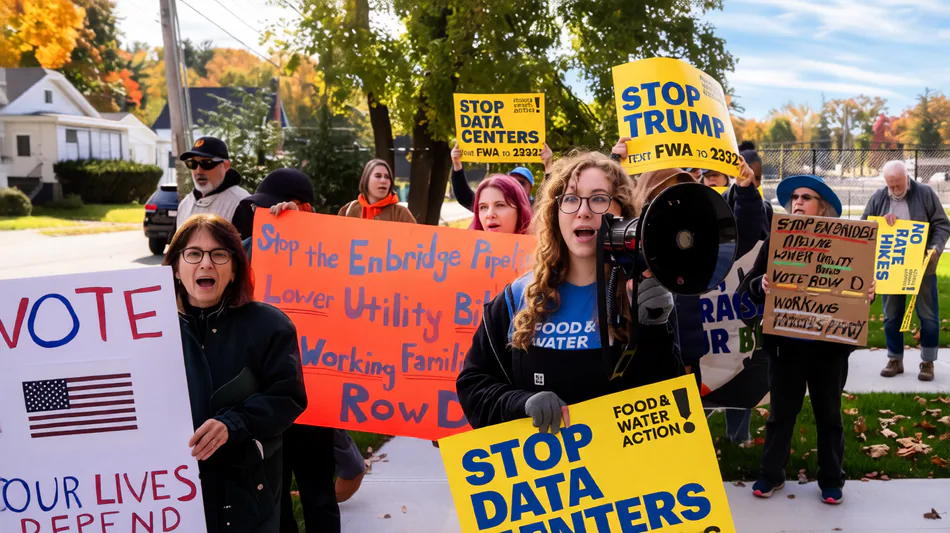
The recent U.S. midterm elections, which resulted in Democrats securing 56 seats in the Senate following late results from Alaska, have provided a critical data set for political strategists regarding environmental engagement. While climate change itself was not directly on the ballot, the election cycle was heavily influenced by issues closely tied to energy policy and infrastructure, including utility affordability, high gas prices, and the expansion of artificial intelligence data centers.
According to Nathaniel Stinnett, founder and executive director of the Environmental Voter Project, these findings challenge the prevailing political strategy known as "climate hushing." This approach involves keeping explicit climate change discourse out of political campaigns. Instead, a September survey conducted by Stinnett’s organization found that voters in battleground states want politicians to spend more time discussing climate change, not less.
Stinnett noted that while the specific phrase "climate change" may not have been at the forefront of every voter's mind during the campaign, the underlying concerns were pervasive. Exit polling data revealed that 87 percent of voters expressed being either very or somewhat concerned about the cost of gas and diesel fuel. Similarly, 86 percent reported significant concern regarding the cost of utilities. Furthermore, well over three-quarters of voters identified artificial intelligence and data centers as a significant factor in their voting decisions.
"You’re right. It isn’t like the words 'climate change' were on everybody’s lips this year," Stinnett said. "However, if you look at exit polling data, it is very clear that voters are extraordinarily concerned about gas and diesel prices... These climate-aligned or climate-adjacent issues were [on their minds]."
The Environmental Voter Project focuses on mobilizing millions of people who care deeply about the environment but do not consistently vote. Stinnett emphasized that this demographic is often misunderstood by political observers. The group identifies tens of millions of non-voters who are disproportionately young, people of color, and lower-income individuals. This reality contradicts common stereotypes of environmentalists as affluent or suburban.
"I know that goes against many of the stereotypes that people have," Stinnett said. "I think a lot of people think of environmentalists as sort of driving around in a Prius wearing a fleece or something like that, but it’s not. We’re seeing that a Latina teenager living in Arizona is just as likely to care deeply about climate and the environment as some hipster living in Brooklyn is."
While environmental concerns were present, Stinnett cautioned against overstating their direct impact on the election outcome. He attributed the historic wave of Democratic victories largely to anti-Donald Trump sentiment. In many red states, voters expressed fatigue with the former president, and his absence from the ballot meant he could not mobilize his base, leading to high turnout among those opposed to him.
"It was a perfect storm," Stinnett said. "I don’t think anything was going to stop this historic wave election... When you combine that with him not being on the ballot, so he couldn’t drive the people who love him to the polls, the haters still showed up. Boy, did it make it hard for any Republican who was running for office to keep their head above water."
In Texas, a traditionally deep-red state, Democrats achieved surprising victories in statewide offices, including James Talarico for Senate and Gina Hinojosa for governor. Stinnett pointed to Talarico’s race as an example of shifting voter priorities. Talarico won by such a large margin that he amassed more early votes than his Republican opponent received in total votes, securing the win before election day.
"We need to be very careful and honest about claiming that climate and the environment drove people to vote in any state this year," Stinnett said. "It was not a top voter priority. It was kind of in the middle of the pack. But what we do know is that voters in Texas are very concerned about climate and environmental issues... This new crop of Democratic politicians... are going to look at this data and see how many of their supporters care about climate and the environment."
Looking ahead, Stinnett outlined two key lessons for incoming Democratic legislators. First, he argued that voters across the ideological spectrum are frustrated with incremental policy changes. Majorities of voters believe the political system is rigged or broken, creating a demand for systemic transformation rather than minor adjustments.
"Voters are sick and tired of politicians making small adjustments on the dial," Stinnett said. "Whether you’re a liberal or a conservative or an independent, huge majorities of voters think that our entire system is rigged or broken or both, so that is calling not for incrementalism, but for Democrats to really think about ways to completely change the system."
Second, Stinnett warned that the 2028 presidential election has effectively begun. Politicians will increasingly focus on the narrow sliver of the electorate that participates in presidential primaries. On the Democratic side, likely primary voters consistently list climate and the environment among their top three priorities.
"The general electorate might not be hungering for climate policymaking right now, but all the voters who are going to decide who the presidential nominee of the Democratic Party are hungering for climate leadership," Stinnett said. "It’s not going to take very long for Democratic legislators to realize that."
Stinnett also addressed the need to reframe climate change from a luxury issue to a universal concern. Data from Pew Research and the Yale Project on Climate Change Communications supports his assertion that those who care most about the environment do not view it as such. For these individuals, climate change is linked to daily health risks, such as breathing toxic air or drinking dirty water, and economic instability.
"If anybody is concerned about climate change, we need to make sure they understand that it is not just a personal issue that affects their shopping habits; it’s also a political issue," Stinnett said. "This is a systemic problem, and systemic problems require political solutions."
He further argued that the intersection of climate policy and public health must be highlighted. "The climate crisis is going to make people unhealthy, and it’s going to make life really expensive. So whenever we talk about healthcare and affordability, we’ve also got to be talking about climate change," he said.
Finally, Stinnett emphasized the importance of breaking the silence on climate issues to combat "pluralistic ignorance." This psychological phenomenon occurs when individuals underestimate the extent to which others share their views. Research shows that most Americans believe their neighbors care less about climate change than they do, a misconception that discourages activism.
"Fifty-nine percent of voters want politicians to talk more about climate, rather than less," Stinnett said. "If you’re a politician, and you’re in doubt about what to say, if voters want you to say something, maybe it’s a good idea to start talking about it."
He concluded that revealing the widespread nature of these concerns is vital for civic engagement. "So many Americans share these concerns, but they’re kind of keeping it secret because they think they’re alone, and we need to let them know that they’re not alone," he said.
As Democrats prepare for the next cycle, the data suggests that ignoring climate change or treating it as a secondary economic issue is no longer a viable strategy. The electorate, particularly in key primary states, is demanding leadership on systemic changes that address both environmental sustainability and immediate economic pressures.
F.Claes--LCdB