Indonesia doing 'everything' but struggling to curb fires / Photo: MUDA SAGALA - AFP
Dozens of planes and thousands of personnel fighting huge forest fires in Indonesia are struggling to contain them, authorities said Monday, while neighbouring Malaysia stepped up efforts to combat toxic haze.
"From the air to the ground, all forces continue to move. Everything is being done to extinguish the fires, reduce the impact of the smoke, and, most importantly, protect the public from the threat of forest and land fires," said Indonesian Cabinet Secretary Teddy Indra Wijaya.
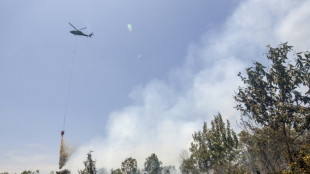
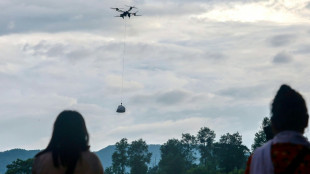
The government has deployed 64 aircraft and 54,000 personnel to the islands of Borneo and Sumatra since last month to try and put out the fires by water bombing, said the cabinet secretary.
But "the vast size of the territory and the challenging conditions of peatlands pose serious difficulties in dealing with forest and land fires in various regions", he added.
The hazardous smoke emanating from the fires has blanketed parts of the country as well as Malaysia and Singapore for weeks.
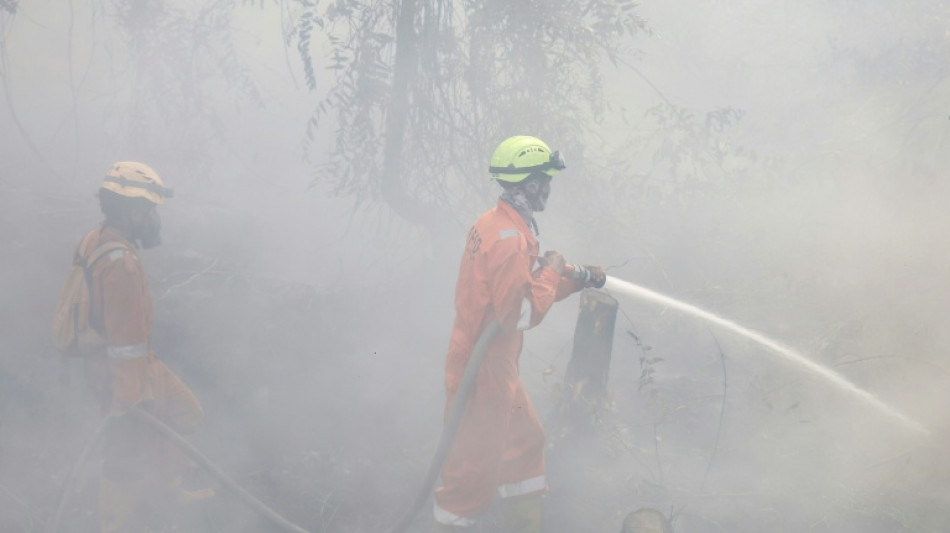
In West Kalimantan province, one of the worst-affected areas located on Borneo island, the disaster mitigation agency said the varied depths of the fires burning inside peat soils were making the task of putting them out difficult.
"Another challenge is the limited water sources available to this ground task force. In general, water sources decrease or even disappear in areas affected by the fires," said agency spokesman Daniel Sinyor.
Last week, Indigenous and civil society groups in West Kalimantan filed a class action lawsuit against the government, including the president and the governor, for allegedly failing to prevent the fire.
"This is a disaster that occurs every year. This recurring pattern proves our view that the defendants knew about the potential haze disaster and the risks of disaster from forest and land fires," the group's lawyer Glorio Sanen said in a statement at the time.
- Cloud seeding -
Around 350 members of Japan's Self-Defense Forces arrived in West Kalimantan this month to assist with firefighting efforts.
Indonesian President Prabowo Subianto has also expressed readiness to accept help from Malaysia, where haze from the fires along with dry conditions have pushed air pollution to unhealthy levels.
Malaysian authorities launched cloud seeding operations in three southern states on Monday to "ensure the continuity of water supply and the sustainability of water resources" and help clear some of the haze, the national meteorological office said.
Under national guidelines, readings above 100 are considered unhealthy, and 300 and over hazardous.
Kuching, on Borneo island which Malaysia shares with Indonesia and Brunei, logged 157 on the air pollution scale.
Indonesia regularly battles wildfires during the dry season, which typically runs from July to October.
But the blazes are more intense this year, coinciding with what is expected to be the strongest El Nino climate phenomenon since comparable records began four decades ago.
Experts also blame climate change, decades of forest degradation and slash-and-burn land-clearing practises that have changed the naturally fire-resistant landscape.
More than 202,000 hectares of land were burned across Indonesia between January and July, according to the government.
The Nusantara Atlas project put the figure at close to 300,000 hectares over the same period, and estimated that the total area affected was nearly 896,000 hectares when including August.
C.Timmermans--LCdB