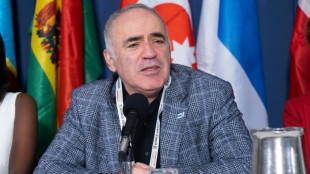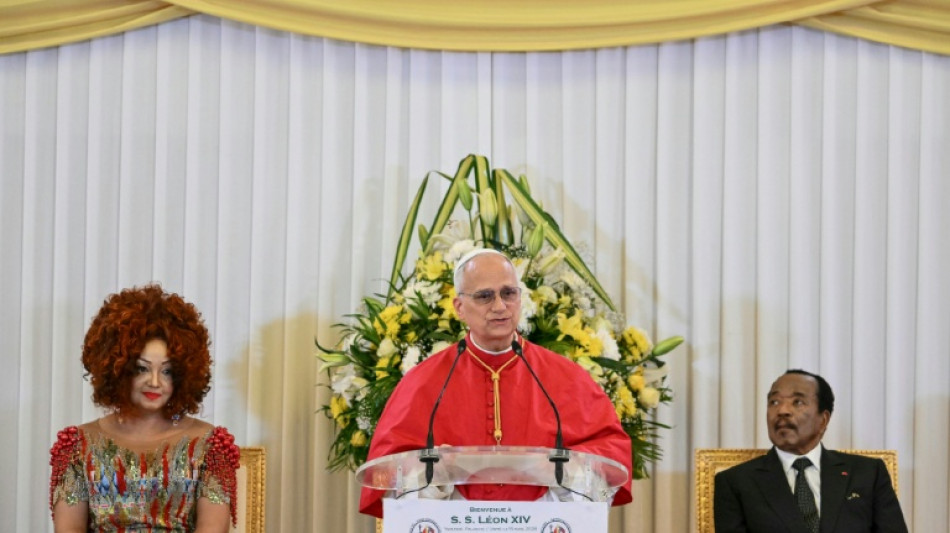
Pope urges Cameroon authorities to examine 'conscience' / Photo: Alberto PIZZOLI - AFP
Pope Leo XIV on Wednesday called on Cameroon's authorities to examine their "conscience" and break "the chains of corruption" on the first day of a visit to the country.
After being welcomed by joyful crowds who lined the streets, the US-born pontiff gave his first address in an unusually direct tone to officials, including President Paul Biya, 93, who has led the central African country with a tight grip since 1982.
"Security is a priority, but it must always be exercised with respect for human rights," the pope said in the presence of Biya, whose authorities cracked down on protests sparked by his disputed re-election for an eighth term in October.
"Public authorities are called to serve as bridges, never as sources of division, even when insecurity seems prevalent," he added.
On Tuesday, several civil society groups condemned "an unprecedented period of repression" since the presidential polls.
They also called for the release of political prisoners, some of whom are held with no legal basis.
Among the around 2,782 prisoners registered by the organisations, 2,630 have not been sentenced, Herve Nzouabet Kweto, from the NGO Source de vie (Source of Life), who signed the statement, told AFP.
"It is time to examine our conscience and take a bold leap forward," the pope said in his address.
"In order for peace and justice to prevail, the chains of corruption... must be broken," he added.
In response, Biya told the officials and diplomats assembled in the capital Yaounde that "the world needs the message of peace" brought by Leo.
The pope's four-nation African tour began amid remarks by US President Donald Trump that he was "not a big fan" of Leo after the US-born pontiff called for peace in the Middle East.
- 'Social peace' -
On Biya's watch, Cameroon has long been plagued by widespread embezzlement, ranking 142nd out of 182 on the Transparency International watchdog's 2025 Corruption Index.
In recent years, the 93-year-old leader has multiplied his trips abroad, either for medical treatment or on holiday to a swanky Geneva hotel, where the opposition accuses him of splashing out vast sums of taxpayers' money.
An international consortium of investigative journalists, the Organized Crime and Corruption Reporting Project (OCCRP), in 2018 estimated the total length of his private stays abroad at 4.5 years over three-and-a-half decades, with a cost of $65 million.
He urged an end to the separatist conflict in Cameroon's English-speaking northwest, where he will head for a visit on Thursday under tight security.
V.Renard--LCdB